
This Mountain Can and Will Be Moved

Heart issues don't have to be immovable mountains. (Flickr)

There is a tremendous shaking, sifting and shifting happening right now across the body of Christ. The heat of the season and the pressure that has come with it is bringing a lot of "dross" to the surface in many hearts.

Last night as I was falling asleep I heard the Lord say that issues of the heart are being brought to the surface in many lives and are overwhelming and looking like mountains. The "issues of the heart" that have come to the surface for many have become so intimidating and so big that many have become "stuck" in the revelation of the wounding, lies, strongholds and struggles that have come to the surface.

I felt the Lord saying these "issues of the heart" have not been brought to the surface to intimidate you, to overwhelm you, or to discourage you, but actually to POSITION YOU for HEALING.

The Lord has REVEALED these things because He wants you HEALED. As you get before Him and share these "issues of the heart" with Him, radical healing and wholeness is going to take place. Perfect love is going to be PERFECTED in you. Shame, fear, struggles, anxieties, worries, crippling strongholds and lies are going to be melted away by His perfect love. 

Don't look at this "heart issue" that has come to the surface as a mountain that cannot be moved. It's about to be melted away. Don't become a victim of this mountain, don't allow yourself to fall into discouragement or condemnation but KNOW that you are moving into greater realms of wholeness and healing. 

The Lord is extending you, He is strengthening you, He is awakening you MORE to the TRUTH of WHO YOU ARE. 

You may feel like these "issues of the heart" are causing a "breaking" and they are, but it is a glorious breaking. A glorious breaking to release you into greater dependence upon Him, greater trust, greater revelation of His love and who you are. You are actually being promoted into new levels of dependence and revelation of His DELIGHT in you and radical LOVE for you. 

He is undoing you with His love and goodness, bringing you into greater freedom. 

In this glorious undoing, not only are things that have entangled you melting away, but He will flow through you more powerfully than ever before.

The breaking process can be painful and uncomfortable but He is carrying you, surrounding you with His love and comfort to BRING YOU TO LIFE. His arms are wrapped around you. You are safe in Him and there is no reason to fear. He is loving you to life!

You are actually moving to a place of greater strength in Him than you have ever been as you embrace this process. Anything hindering you is being broken off. It's time to let go. To free fall into His arms, and see that is the SAFEST place for you to be. To let go of striving, to let go of performance and step into the overwhelming beautiful revelation of His love. 

Embrace to process, fall into His arms and you are moving forward in greater WHOLENESS into a WHOLE NEW WORLD!

Lana Vawser has a heart to encourage the body of Christ and individuals in their walks with Jesus, to have deeper intimacy with Him and to learn to hear His voice. She operates in the prophetic and loves to share the heart of God with others. Lana has written her first book, titled Desperately Deep—Developing Deep Devotion and Dialogue with Jesus, and loves to see others grow in all that God has for them.


How Fasting Can Radically Change Your Life Forever

Fasting and praying on a regular basis can be a life-changing experience. (Lightstock)

What if one simple act—one singular dedicated effort or sacrifice—could better your life, your soul forever? What if that sacrifice took just an hour or two or even an entire day?

Would you do it? Would you consider it worth it?

What if that very sacrifice could sharpen your focus, open your heart and move the hand of God in others and your own life?

If what I asked has peaked your interest, know that I inquire because I have the answers to these questions based on personal experience. What I have to share has the ability to better your life forever once you make the choice to take the adventure.

Twelve years ago, my friend Wendy and I felt prompted to journey down the road of fasting and prayer together. But why would two average women who love to talk and do typical "girl" stuff, and who also really love food, want to give it up for any period of time? God whispered in the inner places of our being to draw closer to Him in a new way.

Suddenly, we didn't want the status quo anymore. We believed and we studied, but in the hidden parts of our heart, we knew there was more. We wanted to engage in the spiritual realm on a deeper level, one we had not yet experienced. We wanted more … so much more.

So, one day a week, from Monday night after our family dinners to Tuesday night before family dinner, we would fast and pray. We were ready for powerful changes, amazing answers to our requests and nothing short of miracles. What we got was instruction and a thorough look into the condition of our soul.

It was hard, to see what still existed in the corners of our minds and the recesses of our hearts. We found the thoughts, the unforgiveness, and the resistance to righteousness still alive and well. Big and little wrongs, judgments and critical spirits. Excessive self-awareness in danger of becoming narcissistic, fear, striving.

However, we were not bombarded with this all at once. Our God is very gentle, very kind. Yet, He is truth and truth was what He intended to show us.

Did He show us our shortcomings to condemn us? Never! He showed us this to better us, to mature us, and to prepare us to come before Him with those sincere, heartfelt requests we desired to have answers to. Yes, and He was, as Scripture puts it, "doing a good work in us."

When we fasted and prayed, our senses were heightened. We focused on getting alone in our own special designated locations to get quiet, to listen and speak once we had been spoken to. On occasion we would speak first, but that was usually to worship and confess anything that had been revealed by our loving Lord. This spiritual discipline tuned our ears to hear the voice of God so that He could meticulously take the sin, the baggage, the past hurts and present trepidations and give us the peace of His presence. We allowed Him control and, as we relinquished our very lives to Him, He would work His good and perfect will in us to much greater and richer places only found through Him.

As time went on, we grew quickly. No longer did we dread the hours we couldn't eat, nor did we binge the night before just so we were sure we had a reserve to live from.

Instead of hungering for food, we hungered for time alone with God, looking forward to His gentle correction and His drawing near to us in a way that filled us with peace, joy, hope and purpose. We were energized and eager to know more about Him, more about us and use what we learned to help encourage others to do the same.

In both of us, God strengthened our faith for the tough times. This was valuable during times of job loss, illness and relationship issues. Sometimes life's pain can cut so sharply you can't find the words to pray. That's when your fasting friend can intercede for you, giving you peace that your concerns—if not from you own mouth—still reach God's throne with the same intensity. The weighty value these prayers carry for a hurting heart provides hope; the hope that eliminates stress that could lead to irreparable health damage. 

Our book, Fast Friends, The Amazing Power of Friendship, Fasting and Prayer, releases October 1. It is our chosen path, ordained by God and it has forever altered our very existence.

Our lives don't look the same as before. We see people differently; we see life differently. We have new aspirations, new leading and guidance, new eyes with which to see ourselves and the future. It's all because a God who loves us more than we could ever comprehend planted a seed of desire to draw closer to Him. Fasting and prayer was the tool, finely fashioned by the hand of God, and the plan, lived out in the Bible by many of the faithful, for us to follow.

We received answers. Some were yes, some were no and some told us to wait. Some spared us and our loved ones from pain and sorrow of which we are not aware. Some answers are yet to come because God's timing is not ours.

One answer that comes quickly to mind concerns Wendy's daughter, Sydney, who was born with cerebral palsy. When Sydney was 4-years-old, the doctors estimated she would need multiple surgeries until her growing ceased. As we fasted and prayed that God would overrule that diagnosis, Sydney continued to grow. Today, she is 14 and surgery hasn't been required.

Fasting and prayer is a lifestyle. God willing, we will continue to fast and pray together until our time is done.

And that "so much more" we were seeking? It has exceeded our hopes and dreams and manifested in ways we would never have fathomed. If God could empower Wendy and me to live this way, He can do the same for you.

Will you join us and dare to live life in the spiritual realm, where you will meet with and know God in ways that you never thought possible? Will you dare to become everything God wants you to be in order to truly know Him? We can promise you will never regret it.

We were made in God's image and created for more than what this world has to offer, and so were you.

Suzanne Niles is the co-author of the new book Fast Friends, The Amazing Power of Friendship, Fasting and Prayer. Find out more at www.fastfriendsbook.com

Healthiest Fast Food Meals

By Elaine Magee, MPH, RD, Reviewed by Amita Shroff, MD | Here are 10 fast food breakfasts, lunches, and dinners you don't have to feel guilty about for those days you couldn't pack lunch or dont feel like cooking.
 
So you're trying to eat healthy and/or lose some extra pounds, but you're on the road and in a hurry – so you find yourself in the drive-through line. Not to worry: There is such a thing as healthy fast food (or at least healthier). You can order a meal at most fast food chains with less than 500 calories, moderate amounts of fat and saturated fat, and ample protein and fiber.
 
Here are 10 of the healthiest fast food meals from some of the top fast food chains. (To make sure your beverage choice doesn't undo the calorie savings, be sure to go for a zero-calorie drink like water, unsweetened tea, coffee, or diet soda.)
 
Healthy Fast Food Meal No. 1. Grilled Chicken Sandwich and Fruit Cup (Chick-fil-A)
Several fast food chains offer a grilled chicken sandwich. The trick is ordering it without mayo or creamy sauce, and making sure it’s served with a whole grain bun.
 
One of the healthier grilled chicken sandwiches out there is made by Chick-fil-A. Grilled chicken sandwiches at Carl’s Jr., Wendy’s, and McDonald’s are close seconds. The Carl’s Jr. sandwich comes with BBQ sauce, while the Wendy’s sandwich includes a calorie-friendly honey mustard sauce. Make sure you order the McDonald’s sandwich without mayonnaise.
 
Nutritional breakdown: A Chick-fil-A Chargrilled Chicken Sandwich (without the honey-roasted BBQ sauce), along with a large fruit cup, has 400 calories, 3.5 grams fat (8% calories from fat), 1 g saturated fat, 0 g trans fat, 55 mg cholesterol, 1120 mg sodium, 65 g carbohydrate, 6 g fiber, and 30 g protein.
 
Healthy Fast Food Meal No. 2. Chili-Topped Potato (Wendy's)
You won’t find a "chili topped potato" on the Wendy’s menu. But you can make this savory and satisfying meal happen by buying the plain baked potato and a small chili. Together, they make a balanced meal with ample protein, carbs, and fat, and half a day’s worth of fiber (12 grams).
 
A plain baked potato and small chili from Wendy’s has 460 calories, 6 g fat (12% calories from fat), 2.5 g saturated fat, 0 g trans fat, 40 mg cholesterol, 855 mg sodium, 80 g carbohydrate, 12 g fiber, and 21 g protein.
 
Healthy Fast Food Meal No. 3: Grilled Chicken Breast with Mashed Potatoes, Corn on the Cob (KFC)
When you want something far from standard fast food fare, KFC’s meal deal can be a healthful solution. Choose their tasty grilled chicken breast as your entree, and mashed potatoes and corn as your two sides. This combination offers plenty of protein (41 grams) with a moderate amount of carbohydrate (49 grams) and fat (10 grams).
 
A meal of grilled chicken, mashed potatoes, and 5.5-inch corncob from (KFC) contains 430 calories, 10 g fat (21% calories from fat), 2 g saturated fat, 0 g trans fat, 90 mg cholesterol, 905 mg sodium, 49 g carbohydrate, 5 g fiber, and 41 g protein.
 
Healthy Fast Food Meal No. 4: Chick-n-Minis Breakfast (Chick-Fil-A)
What’s the best fast food breakfast sandwich? Believe it or not, there are a few contenders. There’s the Breakfast Jack from Jack in the Box, which is fairly low in calories, fat, and sodium (284 calories, 11 grams fat, 4 grams saturated fat, 790 mg sodium). And then there's McDonald’s Egg McMuffin, which has more fiber and protein (2 g fiber, 18 g protein) than many other breakfast sandwiches. But the title goes to Chick-Fil-A’s Chick-n-minis — the lowest in calories, fat, cholesterol, and sodium among the offerings at the major chains.
 
Chick-Fil-A's Chick-n-Minis have 260 calories, 10 g fat (35% calories from fat), 2.5 g saturated fat, 0 g trans fat, 40 mg cholesterol, 650 mg sodium, 30 g carbohydrate, 1 g fiber, and 14 g protein.
 
Healthy Fast Food Meal No. 5: Chicken Teriyaki Bowl (Jack in the Box)
This dish would be better if it had brown rice instead of white rice, and the sodium is definitely high (1461 milligrams). Still, it's very low in saturated fat yet contains plenty of protein (25 grams) and some fiber (4 grams). I chose the Chicken Teriyaki Bowl over Jack in the Box’s Steak Teriyaki Bowl because the steak option has even more sodium (1739 mg) plus 2 more grams of saturated fat.
 
The Chicken Teriyaki Bowl from Jack in the Box contains 585 calories, 6 g fat (9% calories from fat), 1 g saturated fat (2% calories from saturated fat), 0 g trans fat, 36 mg cholesterol, 1461 mg sodium, 106 g carbohydrate, 4 g fiber, and 25 g protein.
 
Healthy Fast Food Meal No. 6: Chargrilled Chicken Cool Wrap (Chick-fil-A)
I think this is the best-looking, best tasting, most satisfying fast food chicken wrap on the market. It doesn’t compare to the smaller wraps made by a couple of other chains. Although you’d probably need two of the smaller wraps for a meal, one of these wraps is likely to satisfy. It’s packed with fiber (9 grams) and protein (33 grams) and moderate in fat and saturated fat. However, it is high in sodium (1,300 mg) and any dressing served with it would add to that. The two Chick-fil-A dressings lowest in fat and sodium are Fat-Free Honey Mustard (60 calories, 0 g fat, 210 mg sodium) and Reduced Fat Berry Balsamic Vinaigrette (70 calories, 2 g fat, 150 mg sodium).
 
Chick-fil A's Chargrilled Chicken Cool Wrap with Fat Free Honey Mustard Dressing has470 calories, 12 g fat (23% calories from fat), 4 g saturated fat, 0 g trans fat, 55 mg cholesterol, 1510 mg sodium, 64 g carbohydrate, 10 g fiber, 33 g protein.
 
Healthy Fast Food Meal No. 7: Southwest Salad and Fruit n Yogurt Parfait (McDonalds)
The grilled chicken salads offered at a handful of fast food chains are among the best options — as long as the chicken is grilled, not fried, and the dressing is light. One standout is McDonalds' Southwest Salad, which is the highest in fiber and protein and among the lowest in saturated fat among the major chains' chicken salads.
 
Another good choice would be the Chargrilled and Fruit Salad from Chick-fil-A, the lowest in fat and cholesterol. (Adding a large bowl of their Hearty Breast of Chicken Soup would make this a filling meal.) Not including dressing, the Burger King Tendergrill Chicken Garden Salad is the lowest in calories, and Carl’s Jr.'s Charbroiled BBQ Chicken Salad is the lowest in sodium.
 
A meal of McDonald's Southwest Salad with Grilled Chicken (not including dressing) and Fruit ‘n Yogurt Parfait has 480 calories, 11 g fat (21% calories from fat), 4 g saturated fat , 0 g trans fat, 75 mg cholesterol, 1045 mg sodium, 61 g carbohydrate, 7 g fiber, and 34 g protein.
 
Healthy Fast Food Meal No. 8. Veggie Burger and Garden Salad (Burger King)
Veggie burgers come and go at fast food outlets, and at this moment the best one is also the only one among major chains. You should order Burger King’s Veggie Burger without mayonnaise, but the cheese slice is up to you.
 
This surprisingly tasty sandwich, which is more like a garden burger than a soy substitute trying to be a beef burger, contributes 7 grams of fiber and 22 grams of protein (25 if you opt for the cheese). Make it a meal by adding a garden salad.
 
A Burger King Veggie Burger (without mayonnaise), Garden Salad (no chicken) and half a packet of Light Italian Dressing totals 450 calories, 12.5 g fat (25% calories from fat), 4.2 g saturated fat, 0 g trans fat, 10 mg cholesterol, 1320 mg sodium, 52.5 g carbohydrate, 10 g fiber, 26 g protein.
 
Healthy Fast Food Meal No. 9: Veggie Delite Sandwich and Tomato Orzo Soup (Subway)
Another good vegetarian option, particularly if you watching your sodium intake, is the Veggie Delite Sandwich from Subway with 5 grams of fiber and 410 milligrams sodium. Pair it with a bowl of vegetable soup for a filling lunch.
 
A 6-inch Veggie Delite sandwich plus Fire-Roasted Tomato Orzo soup from Subway totals 360 calories, 3.5 g fat (9% calories from fat), 1 g saturated fat , 0 g trans fat, 5 mg cholesterol, 820 mg sodium, 69 g carbohydrate, 7 g fiber, 14 g protein.
 
Healthy Fast Food Meal No 10: Chicken Fresco Burrito Supreme and Pintos 'n' Cheese (Taco Bell)
Need a protein-and-fiber boost in the middle of the day? The Chicken Fresco Burrito Supreme gives you 8 grams of fiber and 18 grams of protein with only 21% calories from fat. The sodium is high, however – 1,410 milligrams. If you're looking for a vegetarian choice, Taco Bell's Fresco Bean Burrito has similar nutritional statistics, and goes great with a side of Mexican Rice.
 
A Chicken Fresco Burrito Supreme with Pintos ‘n Cheese from Taco Bell has 520 calories, 15 g fat (26% calories from fat), 5.5 g saturated fat, 0 g trans fat, 40 mg cholesterol, 2140 mg sodium, 69 g carbohydrate, 17 g fiber, 28 g protein.
 
Elaine Magee, MPH, RD, is nationally known as “The Recipe Doctor,” for WebMD and the author of 26 books on nutrition and healthy cooking. The 4th edition of her best-selling book, Tell Me What To Eat If I Have Diabetes, was published February 2014. Other recent books include Tell Me What To Eat If I Suffer From Heart Disease and Food Synergy: Unleash Hundreds of Powerful Healing Food Combinations to Fight Disease and Live Well. Magee’s medical nutrition series includes the best-selling Tell Me What to Eat If I Have Diabetes (over 300,000 copies sold), Tell Me What to Eat If I Have Irritable Bowel Syndrome, Tell Me What to Eat If I Have Acid Reflux, and four others. The series is being distributed all over the world, including China, Russia, Spain, Indonesia, and Arabic countries.
 
Read the the original article on WebMD, © 2010 WebMD, LLC. Reviewed by Amita Shroff.
 

Differences Between Modern Dating and Biblical Dating

Scott Croft | Looking for a completely countercultural path to marriage? Here's how to apply God's Word to dating, finding a spouse and getting married. (soul mate for Christians)

The system today's young men and women have inherited for finding and marrying a future spouse leaves a lot to be desired. We often hear complaints from readers about the confusion, hurt and sexual sin they've encountered despite their best intentions. Many want to know how they can go about getting to know someone and eventually getting married without getting hurt or compromising their faith.

At Focus on the Family, we've offered a range of resources and expert advice bringing biblical principles to bear in this area. Some of the messages we've presented have taken the position that Christians can apply their faith in such a way that they can still work within the system they've inherited. Other messages have stressed that Christians need to be much more counter-cultural. Joshua Harris, for instance, has promoted a model of courtship that harkens back to a model used broadly before modern dating evolved.

People attempting to follow a courtship model within today's culture, however, often run into a lot of practical questions, such as, "What if her dad is unavailable or uninterested in being involved?" or "What do you do when you live hundreds of miles from your family?"

The goal of this series of articles, beginning with this introduction, is to provide our readers with a place to bring those questions. Scott Croft is an elder at Capitol Hill Baptist Church where he teaches a seminar on friendship, courtship and marriage. He is also an attorney who is used to tackling tough questions.

The answers he brings may be different from anything you've heard before. The topics he's going to be dealing with are ones in which equally committed Christians have found different biblical interpretations. Not all will agree with Scott's approach, and we invite feedback from anyone who believes there are better interpretations for the biblical passages Scott draws from.

It's our hope that this Q&A series will be valuable both for those who think the Bible gives sufficient guidance for operating within our current system as well as for those who are looking for a completely countercultural path to marriage.


If you're reading this, you're interested in dating. You've done it, you're doing it, you'd like to do it, or you need to teach somebody else how to do it. Don't worry. You're not alone. In our society, dating has become something of an obsession. It is expected to be a universal phenomenon. It's just something you do if you're single and of age (and that age is quickly dropping) in America. It is considered the natural precursor to marriage, and is generally considered something to be desired, whatever form it might take.

It's also big business. If you were to Google the word "matchmaker," you would receive something in the neighborhood of 11,500,000 responses — with a few of these outfits claiming to be Christian, but most making no such claim. "Dating" will get you 640,000,000 hits.

As evangelical Christians, we're called to be distinct in the ways we think and act about all issues that confront us and those around us. This topic is no exception. So is there such a thing as biblical dating? If so, what is it? How can Christians think differently about this pervasive issue in media and culture? How are we doing so far?

The answer to that last question is "not well." Surveys consistently indicate that professing Christians behave almost exactly like non-Christians in terms of sexual involvement outside of marriage (in both percentage of people involved and how deeply involved they are — how far they're going), living together before marriage, and infidelity and divorce after marriage. In fact, depending on which statistics one believes, the divorce rate for professing Christians may actually be higher than for Americans as a whole. Granted, not all of these people are evangelicals, but we're not doing so well either. Indeed, the central issue we need to confront — and the reason I write and speak on this topic — is that when it comes to dating and relationships, perhaps more than in any other area of the everyday Christian life, the church is largely indistinguishable from the world. That truth has brought immeasurable emotional pain and other consequences to many Christians. Worse, it has brought great dishonor to the name of Christ and to the witness of individuals and the church.

It doesn't have to be this way. For Christians, the Lord has given us His Word, and the Holy Spirit helps us to understand it. We have brothers and sisters in Christ to hold us accountable and to help us apply the Word to our lives. If you're a Christian, that's the biblical life you're called to.

That's what I hope this column will be about — applying God's Word to dating, finding a spouse and getting married.

Scripture Rules

I have to start by explaining the theological doctrine that drives the approach I want to outline (and advocate). That doctrine is called the sufficiency of Scripture. Almost all professing evangelical Christians are familiar with and vigorously defend the doctrine of the inerrancy of Scripture (which states that the Bible is the authoritative Word of God, it's true, and it contains no falsity or error). I certainly agree with the inerrancy of Scripture, but that's not what I'm talking about here. The doctrine of the sufficiency of Scripture assumes inerrancy but then goes a step further. This doctrine simply holds that the Bible is sufficient to guide and instruct us authoritatively in all areas of our faith and life, and that there is no area of life about which the Bible has no guidance for us. The sufficiency of Scripture is taught explicitly and implicitly in many passages, but perhaps the most obvious is 2 Timothy 3:16-17:

All Scripture is God-breathed and is useful for teaching, rebuking, correcting and training in righteousness, so that the man of God may be thoroughly equipped for every good work.

So how does the sufficiency of Scripture apply to our coming discussions? Well, many evangelicals who otherwise believe in the inerrancy of the Bible and who might generally agree with the sufficiency of Scripture have nonetheless embraced the world's ideas about dating. In doing so, some make the argument that Scripture doesn't speak to this topic. I believe it does. The Bible speaks to every area of our faith and life at some level. Some things it talks about explicitly, like salvation or sanctification or marriage or elders. The Bible guides us in some areas by broader, more general principles and ideas we can build on as we strive to live the Christian life in practical ways. In either case, no area of life falls totally outside of the guidance and authority of God's Word.

My point is that we cannot simply state that the Bible "doesn't mention dating or courtship," and then think we're off the hook to pursue this area of our lives either on the world's terms or however seems best to us without diligent, submissive reference to God's Word. If the doctrine of the sufficiency of Scripture is true, then God's Word does have authoritative guidance for us about how we might best glorify God in this area of our lives. That means our conversation has to be a biblical conversation. I mention the sufficiency of Scripture as part of the groundwork for this column because it's one of those doctrines that touches every area of our lives, and it is at the heart of the approach to dating (and life) that we'll talk about here.

Biblical Dating

OK. Let's take care of some basic definitions. We may define biblical dating as a method of introduction and carrying out of a pre-marital relationship between a single man and a single woman:

  1. That begins (maybe) with the man approaching and going through the woman's father or family;
  2. that is conducted under the authority of the woman's father or family or church; and
  3. that always has marriage (or at least a determination regarding marriage to a specific person) as its direct goal.

The Scriptural support for the idea of biblical dating is largely by example and implication. We will look at a number of passages over the course of our discussions that support various aspects of biblical dating, but for the moment, let me just give you some references to study:

  • 1 Corinthians 6:9-7:19 (command to be pure, seriousness of sexual sin and instructions regarding marriage)
  • 1 Thessalonians 4:1-8 (do not wrong or defraud one another in relationships — by implying a relationship or commitment by your words or conduct that does not actually exist)
  • Song of Solomon 2:7 ("do not awaken love before it pleases" — i.e. before the proper time, meaning marriage)
  • Proverbs 6:20-7:27 (warning to avoid sexual sin and foolish relationships)
  • James 1:13-15 (temptation is to be taken very seriously)
  • Romans 13:8-14 (love others, work for their soul's good; don't look to please self)
  • Romans 14:1-15:7 (favor others, not self … value what's good to their souls)
  • 1 Timothy 5:1-2 (treat single women as sisters in Christ, with absolute purity)
  • Titus 2:1-8 (young men and women should focus on self-control/godliness)
  • John 14:15 (if you love Christ, you will obey His commands — read: above your own desires — and live biblically)

We'll talk more about these and other passages as we deal with other topics in this series.

Modern Dating

We may basically define modern dating as a method of introduction and carrying out of a pre-marital relationship between a single man and a single woman:

  1. that begins with either the man or the woman initiating with the other;
  2. that is conducted outside the formal oversight or authority of either person's family or church; and
  3. that may or may not have marriage as its goal and is often purely "recreational" or "educational."

Now, the biblical support for the modern approach to dating … (insert crickets, tumbleweeds, person whistling here)…. That was it. There isn't any. The very idea of extended romantic or sexual involvement outside of marriage doesn't even appear in Scripture unless it is described as illicit (sinful). Furthermore, it doesn't even appear in any society, western or otherwise, in any systematic way until the 20th century. While the principles supporting biblical dating have their beginnings with the very structure of the family, modern dating has its origins with the sexual revolution of the 1960s. It is brand new, and yet, seemingly, it is all we know.

Differences Between Modern Dating and Biblical Dating

So what's the real difference? Here are some fundamentals:

Modern dating philosophy assumes that there will be several intimate romantic relationships in a person's life before marriage. In fact, it advocates "playing the field" in order to determine "what one wants" in a mate. Biblical dating has as its goal to be emotionally and physically intimate with only one member of the opposite sex … your spouse.

Modern dating tends to be egalitarian (no differences between men and women in spiritual or emotional "wiring" or God-given roles). Biblical dating tends to be complementarian (God has created men and women differently and has ordained each of these spiritual equals to play different and valuable roles in the church and in the family).

Modern dating tends to assume that you will spend a great deal of time together (most of it alone). Biblical dating tends to encourage time spent in group activities or with other people the couple knows well.

Modern dating tends to assume that you need to get to know a person more deeply than anyone else in the world to figure out whether you should be with him or her. The biblical approach suggests that real commitment to the other person should precede such a high level of intimacy.

Modern dating tends to assume that a good relationship will "meet all my needs and desires," and a bad one won't — it's essentially a self-centered approach. Biblical dating approaches relationships from a completely different perspective — one of ministry and service and bringing glory to God.

Modern dating tends to assume that there will be a high level of emotional involvement in a dating relationship, and some level of physical involvement as well. Biblical dating assumes no physical intimacy and more limited emotional intimacy outside of marriage.

Modern dating assumes that what I do and who I date as an adult is entirely up to me and is private (my family or the church has no formal or practical authority). Biblical dating assumes a context of spiritual accountability, as is true in every other area of the Christian life.

Basically, we can make three general statements about modern dating vs. biblical dating in terms of their respective philosophies:

  1. Modern dating seems to be about "finding" the right person for me (as my friend Michael Lawrence has written on this site, "Stop Test-Driving Your Girlfriend"); biblical dating is more about "being" the right person to serve my future spouse's needs and be a God-glorifying husband or wife.
  2. In modern dating, intimacy precedes commitment. In biblical dating, commitment precedes intimacy.
  3. The modern dating approach tells us that the way to figure out whether I want to marry someone is to act like we are married. If we like it, we make it official. If we don't, then we go through something emotionally — and probably physically — like a divorce. In biblical dating, Scripture guides us as to how to find a mate and marry, and the Bible teaches, among other things, that we should act in such a way so as not to imply a marriage-level commitment until that commitment exists before the Lord.

I'm supremely confident that as we go back and forth in the coming months, some — perhaps many — of you will disagree (if you don't already) or be initially annoyed at some of my statements. Ask yourself why. What are you trying to hold onto that you think this approach will take from you (privacy, autonomy, a secular idea of freedom or of your own rights)?

I have a particular challenge for those of you whose main objection is that the practical details we'll talk about here "are not explicitly biblical": think about the details of how you conduct (or would like to conduct) your dating life. Can you find explicit support for the modern approach in Scripture? Are there even broad principles in Scripture that justify the modern vision of dating (or yours, whatever it may be)? The Bible simply doesn't give us explicit instructions on some of what we'll discuss. Fair enough. In such a situation, we should ask what gets us closest to clear biblical teaching. In other words, within the many gray areas here, what conduct in our dating lives will help us to best care for our brothers and sisters in Christ and bring honor to His name?

That's it. That's a basic framework for biblical dating as best I can discern it from the principles of God's Word. Now, you're on. No question is too broad or too specific, too theoretical, too theological, or too practical. Agree with what I've said, or challenge it. This is how iron sharpens iron.

Scott Croft served for several years as chairman of the elders at Capitol Hill Baptist Church in Washington, D.C., where he wrote and taught the Friendship, Courtship & Marriage and Biblical Manhood & Womanhood CORE Seminars. Scott now lives in the Louisville, Ky., area with his wife, Rachel, and son, William, where he works as an attorney and serves as an elder of Third Avenue Baptist Church.

Just remember one thing: we're in this together — for His Glory.

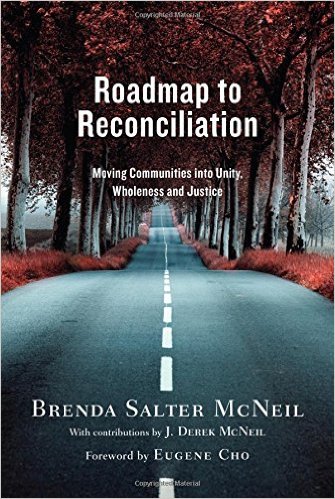
Reconciliation: Moving Communities into Unity, Wholeness & Justice

Dr. Brenda Salter McNeil | How I came to see the church’s prophetic work on race as a global issue.

“Where have you been? Why haven’t you helped us?​” Mavis shouted at us.

Twenty years ago my husband and I found ourselves in the British city of Birmingham, the second most populous urban area in the United Kingdom, and home to a large number of Jamaican residents.

We had been traveling in England for three weeks with a group of African American seminarians and church leaders. It was exhausting and exhilarating in equal measure. We lectured on issues pertaining to the black church in classrooms, preached in churches, dialogued with police, gave radio interviews, talked with civic and community leaders—all in partnership with the Oxford Centre for Mission Studies.

I thought this meeting in the Jamaican community would be the place where we would receive our warmest welcome. We were going to be with other black people! It would be a chance to rest, rejuvenate and let down our guard. I had imagined that we would be laughing and relaxing together in no time over good food and good music.

We pulled up at the church building in our rundown van, and a large group of Jamaican young people were waiting for us outside. But after we filed into the church and sat through some brief introductions, a young woman stood up and literally began shouting at us. Why didn’t you come sooner? Didn’t you know what we were going through?

We sat in complete silence, dumbfounded. We had no idea of their struggle and no sense of their expectations coming into this gathering. So we listened as this passionate Christian woman educated us on the history and the plight of the black British people.

We learned from Mavis that after World War II, the British government had encouraged mass immigration from the countries of the British Empire and Commonwealth to fill the shortages in England’s labor market. Many Jamaicans and West Indians came with the hope of making a better life for themselves and a brighter future for their children. However, instead of being embraced and received as equal members of society, as was promised by the 1948 British Nationality Act, the Jamaicans and other immigrants found that they were relegated to a low status in the economic and racial class system of England, with no hope of ever being fully accepted as “British.”

Even as their children grew, married, and started families of their own, they were essentially foreigners in their own land. And to add insult to injury, being born and raised in England meant that they were considered foreigners in Jamaica as well. Coupled with the injustice of economic deprivation and racial discrimination, this frustration led to violence when young Jamaicans took to the streets to protest in 1981. The status quo unfortunately persisted, however, and a second riot had erupted in 1985, just a year before our visit.

We showed up at their church in 1986, and here was Mavis demanding to know what had taken us so long! Why hadn’t we come sooner to lend our voices and raise awareness about the conditions they were facing? Were we indifferent to their suffering?

Honestly, it was awkward in the church that day, and none of us had any answers for Mavis. We were aware of the racial tensions and inequality in our own country, but we hadn’t realized that there were people in other countries around the world who needed us. We were uninformed about the racial, social, and political plight of our black brothers and sisters in Britain. And to tell you the embarrassing truth, I hadn’t taken any interest before that day.

Their news had yet to break through into our circles in the United States. We didn’t see ourselves as global citizens, nor did we strongly identify with others of the African Diaspora. We were just beginning to reap the benefits of the sacrifices made by the generations before us in the United States. We were finally starting to enjoy some economic stability, increased access to educational opportunities, and greater political and social influence. We hadn’t even considered looking outward. Our knowledge of the rest of the world was woefully underdeveloped.

Mavis’s questions disturbed us. They indicted us. But they also allowed us to see ourselves through her eyes. These young “black Brits” were in the midst of their own civil rights movement, and they felt abandoned by us. They felt abandoned by the black American church.

We learned such a valuable lesson that day. We learned that our story was part of their story. We learned that we were part of a larger global narrative and that people needed us. I came home with the knowledge that I could no longer think of reconciliation in merely nationalistic terms. The world was changing, and I needed some new tools so that I could support folks like Mavis and her friends.

But a lot of us don’t recognize the prophetic role we can play both at home and abroad.

England was my wake­up call. That was when I realized that the world is demanding something more of me and something more of the church. People like Mavis are watching us and wondering why we remain silent on the critical social issues of our day. When unarmed young black men are shot and killed in the United States, why are so many Christians silent as we watch these events unfold? When over 200 schoolgirls are abducted in Nigeria or 148 college students are shot to death in Kenya or 43 abducted in Mexico, why is the Christian community not standing in greater solidarity with them?

It’s time for the followers of Jesus to embark on the prophetic journey that leads to reconciliation and transformation around the world. Many of us may already be aware of the need for reconciliation in our own backyard. We understand the realities playing out in our own neighborhood, our schools, workplace, political system, and culture at large.

But a lot of us don’t recognize the prophetic role we can play both at home and abroad. We aren’t yet fully aware of injustices and inequality in our communities, and this understanding and awareness is absolutely essential if we are to be God’s agents of reconciliation.

We cannot ignore the plight of the people around us, and as globalization continues its relentless march onward, we cannot turn a blind eye to the world beyond our national borders either. We have to face the realities here at home, and we must also embrace the stories of people all around the world.

Dr. Brenda Salter McNeil is an associate professor of reconciliation studies in the School of Theology at Seattle Pacific University, where she also directs the reconciliation studies minor program. Dr. Brenda is also an author, speaker and thought leader with over 25 years of ministry experience in the field of racial, ethnic, and gender reconciliation.


Hardcover – January 4, 2016


How to get all 2 formats and editions
We can see the injustice and inequality in our lives and in the world. We are ready to rise up. But how, exactly, do we do this? How does one reconcile? What we need is a clear sense of direction. Based on her extensive consulting experience with churches, colleges and organizations, Rev. Dr. Brenda Salter McNeil has created a roadmap to show us the way. She guides us through the common topics of discussion and past the bumpy social terrain and political boundaries that will arise. In these pages she voices her call to all believers: "It's time for the followers of Jesus to embark on the prophetic journey that leads to reconciliation and transformation around the world. Many of us may already be aware of the need for reconciliation in our own backyards. . . . We cannot ignore the plight of the people around us and as globalization continues its relentless march onward, we cannot turn a blind eye to the world at large either. We have to face the realities here at home and we must also embrace the stories of people all around the world." Each chapter lays out the next step in the journey. With reflection questions and exercises at the end of each chapter, it's ideal to read together with your church or organization. If you are ready to take the next step into unity, wholeness and justice, then this is the book for you.


Muslim Finding Jesus equals Love & Life Everlasting

Kristen Tritt | Faith – may be the most important among these factors that influence change. (image source)

Growing up in the United States, there is a common belief that the very nature of prison itself is so awful that it would inspire in criminals a conviction never to return, and therefore to stay on the "straight and narrow." This perspective, though, doesn't account for the reality that numerous factors – education, access to jobs, a stable family life, and a sense of purpose – impact recidivism (the rate at which people return to prison).  In fact, a sense of purpose – faith – may be the most important among these factors that influence change. And faith is something that can develop inside prison walls.

Walking through the gates that separate R.J. Donovan State Prison from the rest of the world, it's difficult not to imagine what it would be like to come into this place knowing that you wouldn't be coming back out.  This is the reality for the majority of the inmates I met on my visit to the prison with The Urban Ministry Institute (TUMI.) TUMI facilitates a seminary class for interested inmates that teaches coursework on spiritual disciplines, and I was invited with a group of colleagues to catch up with these inmates on their work. I was not prepared for what I encountered there.

A group of about 30 men, varying in appearance and racial background, but sharing a bodybuilder's physique, trickled into a nearly empty room, which housed only a piano and some bookshelves. On the shelves were copies of the Bible. These men eventually mingled into conversations with my group, and it was in this scenario – like a school dance, where two sides of the auditorium eventually, warily, intermingle with one another – that I found myself face to face with Matthew, who was wearing a skullcap and a cross necklace.

He warmly shook my hand and asked how I was. When I returned the question, Matthew smiled, and a flood of warmth flowed from his lips: "Sister, I am so beyond blessed. You know, God is good, and I have so much joy in my life. He's transformed me." This was not an answer that I expected from a man who would be locked behind doors for the majority of his life. I was stunned as Matthew continued his story, a tale of redemptive transformation.

Matthew, by his own admission, entered prison as a devout, but angry, Muslim. He actually used the term "radical Muslim" in reference to himself, and admitted harboring deep hatred and violent thoughts towards Christians. He said he blamed them for the social ills that plagued the world and eagerly sought out others who shared his beliefs. Also, Matthew was afflicted with cancer in his stomach that required weekly doctor's appointments. He wasn't expected to live, and I can only imagine how that dark knowledge must have colored his already stormy worldview.

At one point during his cancer treatment he was given a new cellmate, a young man who was originally from Egypt, a fact that Matthew hopefully clung to, expecting his new cellmate to share his radical anti-Christian sentiments. Instead, to Matthew's horror, his new cellmate happened to be a faithful Christian, whose reaction to Matthew's cancer diagnosis was to pray fervently for him. In fact, Matthew told me this young man enlisted his own mother to pray for the cancer as well – and she traveled all the way to California from Egypt to do so. Having never seen one another before, the woman prayed over Matthew and praised God for what was to come. He had never before experienced the love and kindness that would prompt a person to travel far and wide just for him, motivated by the desire to help.

In the midst of others' faith – people who were essentially strangers to him – and commitment to God's healing powers, Matthew found himself grappling with his own fundamental beliefs about Christians and God, and tenuously he began to hope that their convictions were correct. After a few weeks of ceaseless prayer from his cellmate and his own fledgling hope for himself, Matthew was overcome one night by a feeling of warmth spreading through his stomach. It's this sensation that finally provoked in him an uncontrolled outpouring of prayer to the same God as his cellmate, and he found himself prostrate on the ground, begging God for a miracle and for forgiveness, and finally, worshipping Him in the same manner as he'd witnessed his cellmate doing many times before.

The following morning was the day the doctor came, and Matthew was scheduled for an MRI, where he was diagnosed cancer-free. Literally overnight, Matthew had been healed from the cancer that was devouring him from the inside out, and ever since then he has been filled with an indescribable sense of joy, and even love.

"I had never felt love before," he admitted to me with happiness in his eyes, "and now I am filled with love for God."

Every time I minister in the prison I am reminded of Matthew 9 where Jesus says, "The harvest is plentiful but the workers are few." God is at work in America's broken prison system. He is quenching the thirsts of those who have longed for something to drink. It is time to for Christians to overcome stereotypes, and realize that prisoners are not outside the bounds of God's grace. Now is the time to help with this harvest.

Kristen Tritt is the media and communications coordinator for Serving California, a foundation committed to building a community of empathy for those who are struggling and provide them with resources to transcend their situations. Kristen is a graduate of the University of California at Santa Cruz with a degree in pre- and early-modern literature. She has worked with various nonprofits and is most interested in social justice issues and work that serves others and builds community.


Can Christians transcend the nihilism of our politics?

Followers of Christ are called to “hope all things.” According to Paul, this is one of the defining features of love. (image source)

I heard a story recently about a fairly well-known evangelical figure who was confronted about public statements he had made in writing and interviews. A fellow believer met and reasoned with him for several hours, explaining that he believed the leader had deceived his audience. When the facts became overwhelming, this influential evangelical conceded that he had been playing fast and loose with facts. However, since his overall message was true and important, he reasoned, it was justifiable to fudge the details in order to motivate voters to make the right decision.

You’re wondering who this evangelical leader is, but in a sense it doesn’t matter, because he could be just about anybody. The belief that American voters must be manipulated rather than reasoned with if we want to institute any meaningful change is endemic. But this belief is essentially nihilist because it makes all political discourse a matter of coercion, a matter of who is doing the coercing and to what ends. I call this nihilist because it makes power, not truth, goodness, or beauty, the foundation of politics.

Followers of Christ are called to “hope all things.” According to Paul, this is one of the defining features of love. If this is true, then for Christians, there is no room for nihilist politics. We are obligated to treat our neighbors as people who deserve honest appeals. This does not mean that all political discourse must be highly rational. There is a place for appeals to emotion, as well as to beauty. Don’t think I am denouncing all political ads that appeal to our emotions. While I do think that our politics could do with a great deal more logic and reason, I reject the idea that only what is rational is relevant to political discourse.

No, my objection is to appeals that are dishonest, and dishonesty can be cloaked in “reason” or “emotion” or “patriotism.” The most common and insidious form that this takes is the example I began with: when we lie about particulars in order to justify a general truth. I call this insidious because it occurs so subtly and is so easy for us to personally justify.

A recent high-profile example of apparent deception for a greater good came from presidential candidate Ted Cruz. According to some accounts, the senator used publically available voting data to shame neighbors into participating in the Iowa caucus. The Cruz campaign sent official-looking letters that urged Iowa residents to vote and gave them and their neighbors a letter grade for past voting. According to the New Yorker, these “grades” were made up and did not reflect residents’ actual voting history. This tactic received significant backlash from voters and Iowa state leaders alike. They felt it was coercive to use shame to get people to vote and deceptive for the Cruz campaign to assign letter grades to voting records, as if the grades were an official part of that record.

Cruz isn’t the first candidate to use this strategy. In 2012, President Obama’s reelection campaign used a similar strategy. The MoveOn campaign mailed out 12 million letters that used “social pressure” to drive voters to the polls. Apparently across the aisle, politicians believe that manipulative, deceptive practices are sometimes necessary to win bigger, more important battles.

But it’s not just political elites who fall into nihilism, where truth is subservient to the power to persuade. Our public conversations about news events and politics often fall into this, too. Let’s say I share a sensational news report about something that Sarah Palin recently said. I add some commentary to the post about how the quotation represents how ignorant Palin is, and several of my friends join in the mockery. Then another friend points out that she never actually made that statement. Embarrassed and anxious to save face, I reply, “Sure, this quotation is fake, but she says stuff like this all the time. The point is, she’s ignorant.”

The problem with this justification, aside from it being an excuse for deception, is that particulars do matter. Maybe Palin has said some outlandish things in her career, but if she hasn’t said those particular words, then by sharing that story you are changing the way people understand her. Put differently, even when a general idea is true, if we misrepresent the particulars, we will necessarily misrepresent the general truth.

As Christians, we should know better than to spread untruths, even when we believe they further a greater, worthy cause. But if you pay attention, you will find people from elite politicians to average citizens accepting and practicing a political nihilism. The fear is that if we don’t exaggerate the facts, if we don’t overstate our argument, if we don’t make a threat sound more serious than it really is, if we don’t make up a few stories that could be true in some sense, then voters won’t be moved to act. And everything will remain the same or get worse.

What this logic assumes is that we cannot trust our neighbors. That we cannot hope all things about them and their ability to reason, understand complex issues, and vote. We treat our neighbors as children who have to be tricked in order to get them to do what we believe is best for them. This kind of hopelessness and disregard for our neighbors is paternalistic and unloving. And this logic denies the sovereignty of God by suggesting that we have cheat to save our country. If God is truly God, then recourse to sin is never necessary to make the world a better place, even in politics.

Hoping all things about our neighbors does not mean that we must be naïve. Not everyone has a college degree, not everyone has time to sort through the rationale between different policies, and not everyone has the resources to fact-check arguments they hear. To be realistic and yet hope all things means that we desire and hope our neighbors will engage thoughtfully with an issue at the level they are capable of given their life situation. The difference is that we should never lose hope in reasoning together such that we resort to coercion and power for the “greater good.”

As this political season rolls on, remember to love your voting neighbors, regardless of who they support and why. Love them, and in that love, hope that they can be reasoned with.

O. Alan Noble, Ph.D., is editor in chief of Christ and Pop Culture and an assistant professor of English at Oklahoma Baptist University. He received his Ph.D. from Baylor in 2013. He and his family attend City Presbyterian in OKC. You may not follow him on Twitter.


‘Hail, Caesar!’ — A Tale of the Christ?

Alissa Wilkinson | "Hail, Caesar!" is both a romp through Hollywood's Golden Age and an unlikely Passion Play. (image George Clooney in 'Hail, Caesar!' – Universal Pictures)
 
Rating: PG-13
Category: Drama film/Musical ‧ 1h 46m
Release date: February 5, 2016 (USA)
Directors: Ethan Coen, Joel Coen
Budget: 22 million USD
Narrated by: Michael Gambon
Screenplay: Ethan Coen, Joel Coen
Look, I know there’s no bigger cliché than a Christian critic sitting around identifying “Christ figures” at the movies. But in their latest, Joel and Ethan Coen show their hand so obviously—the subtitle for the Ben Hur-like film-within-a-film, also called Hail, Caesar!, is “A Tale of the Christ”—that I’m either being trolled or baited. I’ll bite.

Among many (many, many) things, Hail, Caesar! is a passion play: a canny bit of work on the Coens’ part, given this year’s proliferation of biblical epics both remade and reimagined. In just the next few months, that includes Risen, The Young Messiah, Last Days in the Desert, the Tyler Perry-hosted The Passion Live, and the ABC show Of Kings and Prophets—and, yes, a Ben Hur remake.

Watch Hail, Caesar trailer
 
The Coens (being Coens) come at it as a farce, with about 18 different things rumbling beneath the surface. On its basic level, Hail, Caesar! is an affectionate celebration, mild critique, and winking pastiche of Hollywood’s Golden Age, when studios owned actors’ contracts and shot everything from swashbuckling song-and-dance numbers to sword-and-sandal epics on the back lot. Josh Brolin plays Eddie Mannix, the executive in charge of production at Capitol Pictures (that name becomes important later). He goes to confession a lot (“too much,” his priest says wearily) for infractions like smoking a few cigarettes, answers to the never-seen studio head Mr. Schenck (pronounced "skank"), and is being wooed by Lockheed Martin in a job that might involve H-bombs but would still be easier than wrangling the cast of characters he’s stuck with.

Those characters feel like what would happen if Turner Classic Movies accidentally left the door unlocked at night. Scarlett Johansson is a mermaid in a synchronized swimming fantasy picture; Ralph Fiennes helms a high-society Broadway adaptation in which America’s favorite lassoing cowboy (Alden Ehrenreich) is being forced to star so the studio can “change his image”; Channing Tatum is a deceptively mild-mannered singing and tap-dancing sailor; there’s a Carmen Miranda-like sweetheart (Veronica Osorio)—and George Clooney is a centurion among slaves in the sword-and-sandal Hail, Caesar!

That last production is in full swing, and Mannix is watching the dailies (“DIVINE PRESENCE TO BE SHOT,” the subtitles announce at opportune moments—the film is still in production) when he discovers its star has been kidnapped.

In one subplot, in a nod to the Communist writers who were blacklisted, a disciple-like cadre of Communist acolytes following their leader—suggestively named Dr. Marcuse—kidnap Clooney’s genial star and educate him in the ways of “direct action” and “accelerating the dialectic” while holding him for ransom (a startlingly common plot point in the Coens’ films, by the way). Everything can be explained by economics, they say, quoting Marx, and so certainly the concept of rendering to Caesar—either through Capitol Pictures, Das Kapital, or capitalism—is part of this title.

But mostly it’s about the meaning of life by way of religion, with which the Coens have always fiddled, sometimes dancing around the edges and sometimes diving straight into the middle. Hollywood’s Golden Age gives them the perfect excuse for a hysterical scene straight out of a joke: two priests (one Catholic, one Orthodox), a Protestant minister, and a rabbi sit in a boardroom with Mannix, debating whether the depiction of Christ in an upcoming picture “cuts the mustard” or is offensive. As the rabbi points out, for Jews it’s forbidden to portray God, but luckily for them Jesus isn’t part of the godhead. One of the ministers explains that technically Jesus is the Son of God. (The conventional disclaimers at the end of the credits explain that “This motion picture contains no visual depiction of the godhead.”)

Such a scene would in fact have happened regularly at the time, when clergy were called in to consult on both religious movies and others, as part of a partnership between Hollywood and the nation’s ministers to promote the moral health of the nation. It’s worth nothing that in today’s religious movie boom, the same thing often happens—this time to gauge (as in the film) the potential reaction from religious leaders and congregations.

But as I said earlier, this is a passion play, one with Eddie Mannix at its center, our Man of Sorrows, the savior of the (movie) world. Lest we miss that, the film opens on a long establishing shot of a crucifix before moving to Mannix in the confessional booth, where he’s confessing the most banal of crimes before moving on to his work day.

Note: from here on, there are some mild spoilers, though it's hard to spoil a narrative so established.

Unlike every movie executive we’ve ever seen in a film, Mannix is a thoroughly decent guy who speaks nicely to his wife and tries to do his best. But he has reached a crossroads—a point of temptation, if you will. The tempter is a friendly Lockheed Martin executive, who wants him to abandon his true work in the world and come live the easy path.

All day long, Mannix suffers for his stars. He takes their verbal drubbings and deals with their indiscretions and sins and tries to keep them out of trouble, tasked with the thoroughly thankless job of keeping their images squeaky clean. He is dogged by twin competing gossip columnists (both played by Tilda Swinton).

He has been tempted away from this lonely path once and is tempted twice more (in a Chinese restaurant lit like an opium den when he first walks in) by the Lockheed executive, our Satan stand-in, folding the encounter in the desert into the film. He labors under the weight of his own conscience and the weight of the temptation before him, and encounters hazard after hazard on the road to his decision.

Near its end, we catch him in Gethsemane echoes deep in prayer, rosary in hand, as he contemplates what to do—and in a neat trick made possible by the existence of an actual set for a crucifixion scene being shot on the studio lot, he even approaches three crosses on Calvary.

The Coens are too meticulous to not have intended all that. What’s so fun about Hail, Caesar! is that it lets all the characters (played by your actual favorite movie stars) and sets and images from films made both during and about its time, from comedies to noirs to political dramas, come together in a grand mash-up that is then structured like one of the most enduringly popular genres: the biblical epic, the “Greatest Story Ever Told,” the archetypal tale of suffering and redemption.

But they don’t spring for an easy analogy. These are the Coens: nothing serious ever happens without a wink or a joke. Mannix isn’t the actual man of sorrows; he’s just in the movie business, which is always at its end a bit (or more than a bit) absurd. A speech given by the centurion at the foot of the cross seems like the stand-in for his epiphany—but later he gives a different confession, one that rings more true, about feeling that what he’s doing in the movie business is right and important.

So in a bit of in a bit of cyclical storytelling that recalls the repetitive structure of their last film about a soul tortured by his work, Inside Llewyn Davis, Mannix returns to the confession booth and talks about his cigarette habit. In classic Coen fashion, meaning in life comes down to the love that individuals share with one another, not the absurdity inherent in fate or big ideological systems. Mannix loves his wife too much to not feel bad about quitting his habit; other characters love their ridiculous dogs more than money, or make unlikely matches in unlikely offices. Every day is a fresh set of trials and temptations for the man of sorrows, but he never really faces crucifixion—just another day on set.

Caveat Spectator

Hail, Caesar! is rated PG-13 for suggestive situations and smoking. Most of what’s uncouth about it is done by implication rather than seen on screen. The sailors’ song-and-dance scene is innocently (or not) homoerotic, and the mermaid one seems rather obviously phallic, but that will sail right past plenty of viewers. A character talks about another one engaging in “sodomy” (that is the word used) to get a job; another character is pregnant without being married, which provides a plot point for the film. It’s possible that some religious viewers might be offended by the film-within-a-film giving occasion for a few situational jokes in a religious context, but it certainly isn’t done irreverently. And neither Communism nor capitalism is outright condemned by the film itself, which I suppose some people may find offensive.

Alissa Wilkinson is Christianity Today’s chief film critic and an assistant professor of English and humanities at The King’s College in New York City. She is co-author, with Robert Joustra, of How to Survive the Apocalypse: Zombies, Cylons, Faith, and Politics at the End of the World(Eerdmans, April 2016). She tweets @alissamarie.


Making the Most of Lent

by Rev. Ketlen Solak, Brandywine Collaborative Ministries (image source)

Lent this year begins Wednesday, February 14 and ends Thursday, March 29, during this forty-day journey, we will do our best to walk “The Way” – that is, we will do our best to follow Jesus more closely. Most of us will observe Lent in some manner, perhaps by spending more time in study, prayer, fasting, or by embracing something new that helps us grow spiritually.

The Church calls us to celebrate Lent for that very purpose – for the purpose of deepening our spiritual experience. The season of Lent gives us the opportunity to follow Jesus as he deliberately walked toward Jerusalem knowing that there he would inevitably face the suffering of betrayal, humiliation, torture, and death. Lent gives us the opportunity to remember more keenly the courage, the generosity, and the priceless gift of Jesus.

Hence, on Ash Wednesday we receive the invitation to observe a Holy Lent, which is an invitation to set time apart to engage in the types of spiritual enrichment that I have already mentioned. Yet, for many of us, Lent has arrived at a time when life is particularly difficult and painful. In this case, Lent is a time to simply remember that Jesus understands – a time to remember that Jesus has tasted pain and suffering, and that Jesus is walking the way with you.

No matter where we are in terms of our experience of life, I pray that the Holy Spirit will give us the measure of hope and strength that exactly fits our need. I also pray, as we observe Lent together, that each one of us will gain greater insight about the magnificent grace of God, and that our hearts will be moved anew by the power of Holy Spirit – that our hearts will be moved to new depths of gratitude and adoration for the One who first loved us and has fully demonstrated the meaning and cost of love.

The Rev. Ketlen Solak was called in 2014 to serve as Covenant Rector of the Brandywine Collaborative Ministries (BCM). Solak is leading the work of the three linked parishes of Brandywine Hundred, Wilmington: Calvary, Hillcrest, Church of the Ascension, and Grace Church. Ketlen graduated from the Virginia Theological Seminary (VTS) in May of 2005 and was ordained a priest in the Diocese of Virginia in June of that year. She has a deep passion for music and enjoys to sing.


Exploring the Lifestyle of a Prophet

James W. Goll | The spirit of this world is out of control and vying for the attention of any half-interested soul (image © V. Gilbert & Arlisle F. Beers)

A battle is being waged in our day—an end-time battle of passions, an unprecedented competition between the altars of fire. The spirit of this world is out of control and vying for the attention of any half-interested soul. Sometimes it seems we have more "Hollywood" than "holy good" in the church.

But good news is on the horizon. This fierce fight of the ages will escalate as waves of God's irresistible love wash over us, and the constraints of stale religiosity are replaced by passionate, fiery, relatable Christianity. A revolution of intimacy is coming in the church. Is that not what your heart is aching for? Like John, the beloved disciple of Jesus, we too shall learn to lean our heads on our Master's chest and rest in the sound of His heart beating in the rhythm of love (John 21:20).

As we look at the lifestyle of intimacy in the life of a prophet, let me share with you some thoughts and principles drawn from the book of Genesis on the relationship between intimacy and the prophetic.

Genesis 2:7 grants some awesome relational insights: Then the Lord God formed man from the dust of the ground and breathed into his nostrils the breath of life, and man became a living being." What a beginning! All humankind took on life by the very breath of God's mouth. Talk about an intimate exchange! Ponder this for a while. In some manner, God blew into the lump of clay that He had fashioned, and Adam's body took on an added dimension. Man became a living being.

That is what the prophetic life and ministry are all about—human beings being filled with the breath of God and then in turn exhaling onto others the breath of life they have received from their Creator. This is what our Messiah did as well. After His resurrection, He appeared to His disciples, who were hiding for fear. He said, "As My Father has sent Me, even so I send you" (John 20:21). Then Jesus breathed on them and said, "Receive the Holy Spirit" (verse 22).

At the Last Supper of Jesus with His trainees, John leaned back on the Lord's chest (John 13:25). What do you think he heard? Yes, probably the pulsating heart of the Savior, but he also would have heard something else: the Messiah's very breath as He inhaled and exhaled. Imagine being so close to the Lord that you hear Him breathing!

Some of the writers of the past knew something of this intimacy. Consider the hymn "Breathe on Me, Breath of God" written in 1878 by Edwin Hatch:
Breathe on me, Breath of God,
Fill me with life anew, 
That I may love what Thou dost love,
And do what Thou wouldst do.
Breathe on me, Breath of God,
Until my heart is pure,
Until with Thee I will one will,
To do and to endure.
Breathe on me, Breath of God,
Till I am wholly Thine,
Till all this earthly part of me
Glows with Thy fire divine.
Breathe on me, Breath of God,
So shall I never die,
But live with Thee the perfect life
Of Thine eternity.
 
Yes, man became a living being when the intimate breath of Almighty God blew into Adam's lungs. So it was that he became a transporter of God's presence, a contagious carrier of the infectious Spirit of God.
 
God's Original Design

God's original intent was for all of us to be carriers of His presence. Today the Lord is looking for vessels He can breathe into once again. He seeks some He can put His mouth on, as it were, and blow His Spirit into them, so that their lungs, their hearts, their souls, their bodies, their temples will be filled with the very breath of the Almighty. He wants us to be carriers of His most brilliant presence. What could be greater?

That was the Lord's original intent. And we know what followed: "Therefore a man will leave his father and his mother and be joined to his wife, and they will become one flesh. They were both naked, the man and his wife, and were not ashamed" (Gen. 2:24-25). Here we are given a graphic picture of what things look like when a man or woman is filled with the brilliance of God's presence. When we are filled with His pneuma (the Greek word for breath), we are not self-absorbed and fearful but walking with God and others in transparent love.

Adam and Eve were not ashamed. They were not overcome by guilt, nor were they driven by condemnation. They were not hiding behind whatever leaves they could find. They were naked; they were walking in honesty; they were enjoying intimate communion with God; and they "knew" each other.

That is God's design for marriage, which is the picture of the union He plans for us as the bride of Jesus Christ (Eph. 5:22-32) and our incredible, glorious Husband. This Master of ours wins our hearts with one glance of His eye (Song 4:9). And the amazing thing is, one glance of our own eyes shining back into His undoes His heart as well. What a profound mystery! The revelation of this truth alone would create a revolution of intimacy among God's people. It is awesome, and it is pictured right here in the Garden of Eden, at the beginning of all things.

Adam and Eve were hiding behind nothing. Their hearts were beating with love for one another, and they were not ashamed. There were no barriers to intimacy.

*Excerpted from The Lifestyle of a ProphetDr. James W. Goll is the cofounder of Encounters Network, a ministry to the nations. He has written fifteen extensive Bible study guides and is the author or coauthor of fourteen books, including The Coming Prophetic Revolution and Praying for Israel's Destiny. Goll is a contributing editor to Kairos magazine and speaks and ministers around the world.

Dr. James Goll is the founder of Encounters Network, Prayer Storm and helps carry on the work of Compassion Acts. For information on his online school visit: geteschool.com. James continues to live in Tennessee and is a joyful father and grandfather today.


Child of God

Star Star | Scout Tafoya | Thriller/Drama | 1h 44m
In 1960s Tennessee, a violent loner (Scott Haze) loses his last vestige of humanity as he enters a downward spiral of madness, crime and degradation.

Initial release: April 28, 2014 (United Kingdom)

Director: James Franco

Story by: Cormac McCarthy

Adapted from: Child of God

Initial DVD release: October 28, 2014 (USA)
Cast:
James Franco (Jerry)

Jerry

Scott Haze (Lester Ballard)

Lester Ballard

Jim Parrack (Deputy Cotton)

Deputy Cotton

Tim Blake Nelson (Sheriff Fate)

 Sheriff Fate

Vince Jolivette (Ernest)

Ernest

You've got to admire James Franco's chutzpah. After directing a few vacant things that barely count as movies, he just started going around buying the rights to classics like he was William Wyler or John Huston. After "As I Lay Dying," last year’s fascinating, if perhaps undercooked Faulkner adaptation, Franco has returned with a stab at Cormac McCarthy’s early novel "Child of God." People who were worried when Franco snapped up the option to "Blood Meridian," McCarthy’s ‘unfilmable’ masterpiece, won’t have their fears allayed any by a good faith but blank retelling of McCarthy’s first major statement. Franco clearly wants to be a provocative artist with the chops to bring major literature to life, but he has no relationship with the camera. Every cut has the same effect as the curtain raising on the next act of a play: here’s some more action, for better or worse. It’s like "Dogville" with the sets filled in; watchably eccentric but rudderless.


The Nature of God

God is truly a loving God to give His only begotten Son to die for us (iStock image)
by Ron Boatwright Connect via ron@netbiblestudy.net
 
Man has a sin problem, but God has the solution and the answer.  God is a loving God.  John 3:16, "For God so loved the world, that He gave His only begotten Son, that whoever believes in Him should not perish, but have everlasting life".  God is truly a loving God to give His only begotten Son to die for us.  That is the ultimate of love.  Nothing could be greater.
 
Not only is the Lord loving, but He is also just.  Jesus says in John 5:30 (KJV), "I can of my own self do nothing: as I hear, I judge; and my judgment is just".  Yes, when we stand before the Lord on the Day of Judgment, He will be just.  But justice demands that the guilty be punished.  Let me give you an example.  Just suppose I went out and robbed a bank, and was caught.  Also suppose that the judge and I were good friends.  So the judge calls me up to his bench and whispers to me that he doesn’t want to send me to prison for twenty years.  He tells me, that if I will quietly walk out the back door, he will tear up all the paperwork, nothing will be said, and I can go free.  Would he be a just judge?  No way.  But God is a just God, and can be no less.
 
Not only is God a loving and just God, but the Bible speaks of God as a vengeful God.  In Hebrews 10:30-31 we read, "Vengeance is mine, I will repay, says the Lord.  And again, the Lord will judge his people.  It is a fearful thing to fall into the hands of the living God".  Most people like to think of God as only a loving God, and nothing else; but this is not true.  On the Day of Judgment, the majority of people will find out just how fearful it is to fall into the hands of the living God.
 
Why did Jesus have to die?  Because God is not only a loving God but he is also just.  Justice demands punishment for the guilty. God has specified in the Bible how He will erase anyone’s guilt.  But we must obey God’s instructions.  Those who continue to be guilty are those who have not obeyed what God has said.  At the end of time when Christ comes back 2 Thessalonians 1:8-9 says that He will come “In flaming fire taking vengeance on those who do not know God, and on those who do not obey the gospel of our Lord Jesus Christ.  These shall be punished with everlasting destruction from the presence of the Lord and from the glory of His power.”
 
God is also a God of grace.  Grace is the unmerited favor of God.  Romans 3:23-24 tells us, "For all have sinned and fall short of the glory of God, being justified freely by His grace through the redemption that is in Christ Jesus."  We have all sinned.  We all deserve to be punished throughout all eternity for our sins, but Christ Jesus has already taken our punishment.  God, by his grace, that is His unmerited favor toward us, can now be just in saving us, through the redemption that is in Christ Jesus.  Our redemption is in Christ Jesus, and not in ourselves.
 
It is by the grace of God that one is saved.  In Ephesians 2:8-9 we read, "For by grace you have been saved through faith, and that not of yourselves; it is the gift of God, not of works, lest anyone should boast."  We are saved by the unmerited favor of God through our "obedience to the faith" (Romans 16:26, Matthew 7:21).  There is no way that anyone could ever be good enough to go to heaven, because we have all sinned.  We all deserve to be punished eternally.  There is no way that anyone could ever earn his way to heaven, because heaven will be a gift of God for those who go there.
 
Our Lord says in Luke 17:10, "So likewise you, when you have done all those things which you are commanded, say,  We are unprofitable servants.  We have done what was our duty to do."  We cannot do enough to earn our salvation.  We read in Isaiah 64:6, "But we are all like an unclean thing, and all our righteousnesses are like filthy rags."  There is no one of us that deserves to be saved.  It is only by the grace of God that anyone will be saved.
 

The Prayer of the Lord

Even simple, faith filled recitation of God's living Word is healthy and extremely positive (images, iStock and book by David & Kim Butts)

The concept of offering up requests in the hopes that an invisible, distant God would deliver what we desire is the primary model of prayer for many Christians today. Read the list of prayer requests and hope for the best!

I remember growing up as a young Catholic boy people reciting the Lord's Prayer over and over again as if I was fulfilling some religious duty. Those were not happy days as I lived in unhealthy fear presuming God would reject me unless I fulfilled the quota.

Now, I do agree that even simple, faith filled recitation of God's living Word is healthy and extremely positive. However, too many presume reading the Lord's Prayer or other scriptures is the totality of their assignment in prayer. Read it, agree with it and move on.

This is the error I want to talk about.

Prayer isn't a stale, tedious chore that, once accomplished, we earn favor with God and our desires (or demands) are met as requested. Prayer is the expression of the passion of our heart as we come into fervent, joyful agreement with God. That expression is explosive, and it's actually laughable to presume it can be limited to the mouthing of words! True prayer is comprehensive, and it overwhelms us into radical agreement with God and aggressive response to His directives.

Prayer Isn't Mostly About Us

Prayer is at its most powerful when the focus isn't on us.

"When you pray, you shall not be like the hypocrites. For they love to pray standing in the synagogues and on the street corners that they may be seen by men. Truly I say to you, they have their reward" (Matt. 6:5, MEV).

While we may not bring focus to us by religiously praying on the street corners, is it possible that the content of our prayer is at times narcissistic? Is it about bringing attention to us and our situation or to God and his?

"But you, when you pray, enter your closet, and when you have shut your door, pray to your Father who is in secret. And your Father who sees in secret will reward you openly" (Matt. 6:6, MEV).


Prayer Isn't About Coercing God

"But when you pray, do not use vain repetitions, as the heathen do. For they think that they will be heard for their much speaking. Do not be like them, for your Father knows what things you have need of before you ask Him. Therefore pray in this manner: Our Father who is in heaven, hallowed be Your name" (Matt. 6:7-9, MEV).

I was repeating the Lord's Prayer over and over again as a young child, convinced that my devoted work of speaking out loud would please God and result in a big thumbs up. If you think about that, it's kind of demented thinking! It reminds me of tribal religions in which people sacrifice chickens and mark their bodies as an offering to their gods in the hopes that they are spared from drought, floods and other natural disasters.

Prayer for the Christian comes from the place of deep, abiding love and a wondrous relationship with Jesus.

"Delight yourself in the Lord, and He will give you the desires of your heart. Commit your way to the Lord; trust also in Him, and He will bring it to pass. He will bring forth your righteousness as the light, and your judgment as the noonday" (Psalm 37:4-6, MEV).

Again, our prayer is simply an expression of our revelation of Jesus! We are ignited with passion as a result of knowing God intimately. We can't help but declare the wonders of our God!

Imagine what would erupt out of you after having an experience as is described in Revelation 19. That outburst, that response, is prayer!

"I saw heaven opened. And there was a white horse. He who sat on it is called Faithful and True, and in righteousness He judges and wages war. His eyes are like a flame of fire, and on His head are many crowns. He has a name written, that no one knows but He Himself. He is clothed with a robe dipped in blood. His name is called The Word of God. The armies in heaven, clothed in fine linen, white and clean, followed Him on white horses. Out of His mouth proceeds a sharp sword, with which He may strike the nations. "He shall rule them with an iron scepter. He treads the winepress of the fury and wrath of God the Almighty. On His robe and on His thigh He has a name written: KING OF KINGS AND LORD OF LORDS" (Rev. 19:11-16, MEV).


The Prayer of the Lord

The Lord's Prayer is just that—the passions of Jesus. It is truly the prayer of the Lord.

We aren't to be limited to a simple recitation of words on paper. There is a fervent passion that should be sizzling in our veins as we declare this potent, culture-rocking prayer.

"Confess your faults to one another and pray for one another, that you may be healed. The effective, fervent prayer of a righteous man accomplishes much" (James 5:16, MEV).

The Lord's Prayer is an intense declaration of lifestyles that are shaking and shocking our culture. It is an expression of agreement with the plan of God for the nations of the earth!

Holy Are You

"Therefore pray in this manner: Our Father who is in heaven, hallowed be Your name" (Matt. 6:9, MEV).

This verse shouldn't be easy to be casually read aloud! The call is for us to have a visitation of God and his holiness! A revelation that causes us to collapse to our knees with our faces buried in our hands as we tremble and cry, "Holy!"

Can you imagine what it will be like to gaze upon perfect purity in our beautiful God's countenance second after second forever? Oh, Lord Jesus, come! What an eternity that will be! Day and night never ceasing to declare, "Holy is the Lord God Almighty!"

"Before the throne was a sea of glass like crystal. In the midst of the throne, and around the throne, were four living creatures covered with eyes in front and in back. The first living creature was like a lion, the second living creature like a calf, the third living creature had a face like a man, and the fourth creature was like a flying eagle. The four living creatures had six wings each, and they were covered with eyes all around. All day and night, without ceasing, they were saying: 'Holy, holy, holy, Lord God Almighty,' who was, and is, and is to come." (Rev. 4:6-8, MEV).


Your Kingdom Come

"Your kingdom come; Your will be done on earth, as it is in heaven" (Matt. 6:10, MEV).

The conflict of flesh vs. spirit should be causing veins to bulge in our necks as we cry out to God, "I despise the limitations of the flesh! I reject my own natural wisdom and I declare with boldness that Your wisdom, Your government, Your kingdom is superior!"

This prayer can't be limited to a one-sentence, three-second read. As we draw closer and closer to Jesus, we develop a never-ending yearning for God and His leadership. Everything else will appear as foolishness in comparison with the government of Jesus.

Our Daily Bread

"Give us this day our daily bread" (Matt. 6:11, MEV).

Related to the previous point, we are declaring our joyful dependence on God. Instead of our Santa Claus-style requests flying heavenward in hopes of having our desires gift wrapped and delivered by God, we tell Him, "Get me whatever You want."

How powerful is it to move beyond asking God for the obvious and allowing Him to surprise us! Talk about an addicting prayer life! Sometimes the best prayer is not to pray at all. What I mean is, if we have faith that He will supply all of our needs, why would we beg Him for our needs to be met?

We can certainly have honest discussions with God about what we are struggling with, but we should do so without worry or frustration. We simply rejoice as we trust God to give us our bread every single day, and I think it's best if he chooses just what that bread is!

Rejoice in the Lord always. Again I will say, rejoice! And the peace of God, which surpasses all understanding, will protect your hearts and minds through Christ Jesus" (Phil. 4:4-7, MEV).

"Therefore, take no thought, saying, 'What shall we eat?' or 'What shall we drink?' or 'What shall we wear?' (For the Gentiles seek after all these things.) For your heavenly Father knows that you have need of all these things. But seek first the kingdom of God and His righteousness, and all these things shall be given to you" (Matt. 6:31-33, MEV).


Forgiveness

"And forgive us our debts, as we forgive our debtors" (Matt. 6:12, MEV).

Again, this cry of our heart should be automatic. The Lord's Prayer is a passionate decree of the reality of our lives in Christ. Sin should cause us to weep and grieve as we again draw near to God with confession on our lips. Unholy decisions should so disrupt our flow in the Holy Spirit that we are nearly crushed under the weight—only to find God Himself running to us to forgive us and give us new life!

The seriousness and destructiveness of sin should also cause us to forgive quickly—instantly—others who have wronged us. That declaration of freedom for others bellows out of us as we unlock prison cell after prison cell, allowing the guilty to go free!

In fact, this point in the prayer is so critical it is revisited again at the end:

"For if you forgive men for their sins, your heavenly Father will also forgive you. But if you do not forgive men for their sins, neither will your Father forgive your sins" (Matt. 6:14-15, MEV).

A lifestyle of setting people free should mark every one of us. It's what God does, and it's what we do!

Deliver Us From Evil

"And lead us not into temptation, but deliver us from evil. For Yours is the kingdom and the power and the glory forever. Amen" (Matt. 6:13, MEV).

As inhabitants of a fallen world, we are keenly aware of the power of evil and the enticement of the enemy. This passionate plea should be forever on our lips or until we enter eternity, at least.

The thought of anything compromising our energizing, fiery, zealous relationship with the Lover of our souls should result in sobriety and a locked-in demeanor. We must understand the power of sin, and we have no option but to be continually aware of its devastating force.

"Whomever you forgive anything, I also forgive. For if I forgave someone anything, for your sakes I forgave it in Christ, lest Satan should take advantage of us. For we are not ignorant of his devices" (2 Cor. 2:10-11, MEV).


It's All About God

"For Yours is the kingdom and the power and the glory forever. Amen" (Matt. 6:13, MEV).

This is true worship!

I want to exhort you to allow the Prayer of the Lord to become your own. Let it be an expression of your overflowing, all-in lifestyle of worship and surrender to Jesus.

It's not just a good group of words to read before bed. Prayer, especially prayer like this, is a testament to who we really are and what we really believe. It's an expression of our raging passion for God and a decree of our agreement with and position in Him!

Watch the accompanying video here.

John Burton has been developing and leading ministries for over 20 years and is a sought out teacher, prophetic messenger and revivalist. John has authored nine books, has appeared on Christian television and radio and directed one of the primary internships at the International House of Prayer (IHOP) in Kansas City. Additionally, he planted two churches, has initiated two city prayer movements and is currently directing a prayer- and revival-focused ministry school in Detroit called theLab University. John's mandate is to call the church in the nations to repentance from casual Christianity and to burn in a manner worthy of the King of kings. He is equipping people to confront the enemies of God (established religion, Jezebel and so on) that hinder an extreme, sold-out level of true worship.

Please visit thefurnace.tv for the original article.


New Dietary Guidelines Support Healthy Choices for All Americans

Summary: The latest edition of the Dietary Guidelines focuses on three main takeaways to help Americans make decisions about healthy eating.

Today, we are delighted to announce the release of the 2015-2020 Dietary Guidelines for Americans.

We know that a lifetime of healthy eating helps to prevent chronic diseases like obesity, heart disease, high blood pressure, and Type 2 diabetes. The Dietary Guidelines provides a clear path for the general public, as well as policy makers and health professionals and others who reach the public, to help Americans make healthy choices, informed by a thoughtful, critical, and transparent review of the scientific evidence on nutrition.

Obesity and other chronic diseases come not only with increased health risks, but also at a high cost. Healthy eating is one of the most powerful tools we have to reduce the onset of disease.

The latest edition of the Dietary Guidelines focuses on three main takeaways to help Americans make decisions about healthy eating.

Eat for Health and for the Long Run
The path to improving health through nutrition is to follow a healthy eating pattern that is right for you. The science behind healthy eating patterns tells us that they can help prevent chronic diseases like obesity, heart disease and Type 2 diabetes.
 
A healthy eating pattern can be maintained over a person’s lifetime and, at appropriate calorie levels, promotes health and supports a healthy body weight. You can include many of the foods that you enjoy in a healthy eating pattern.

“What exactly is a healthy eating pattern?” A healthy eating pattern:

  • consists of all foods and drinks that a person consumes over time;
  • is adaptable to a person’s taste preferences, culture, traditions, and budget;
  • includes a variety of nutritious foods like vegetables, fruits, grains, low-fat and fat-free dairy, lean meats and other protein foods, and oils; and
  • limits saturated fats, trans fats, added sugars, and sodium.

There is more than one type of healthy eating pattern — the 2015-2020 Dietary Guidelines includes various examples of healthy eating patterns.

Learn more about healthy eating patterns and read the top 10 things you need to know about the Dietary Guidelines to learn more.

 
Start with Small Changes
It’s easy to get overwhelmed by the idea of changing what we eat. By focusing on small improvements, eating healthy becomes more manageable. With so many choices to make every single day about what to eat and drink, each choice is an opportunity to make a small, healthy change — like replacing refined- flour bread with whole-grain bread.
 
Here’s more food for thought — almost 9 in 10 Americans get less than the recommended amount of vegetables. Instead of a whole new way of eating, find new ways to incorporate more veggies to dishes you’re already making.  Further, American adults consume about 50 percent more sodium than the Dietary Guidelines recommends. Use the Nutrition Facts label to check for sodium, especially in processed foods like pizza, pasta dishes, sauces and soups.

See more examples for making small shifts to food choices to help ensure that meals are nutritious, healthy, and delicious.

 
Support Healthy Choices for Everyone
Many Americans may need to make changes to their food choices and get more physical activity to stay healthy, but they shouldn’t have to do it alone. Everyone has a role to play in encouraging easy, accessible, and affordable ways to support healthy choices at home, school, work, and in the community. The 2015-2020 Dietary Guidelines for Americans includes examples of strategies that support healthy choices.

Learn more about how you can help support healthy choices.


HHS and USDA share a responsibility to the American public to ensure that advancements in scientific understanding about the role of nutrition in health are incorporated into the Dietary Guidelines on a regular basis. To reflect the most recent science, HHS and USDA release a new edition of the Dietary Guidelines every five years. We’re grateful to our federal partners who worked with us to develop the Dietary Guidelines. For additional information, be sure to check out ChooseMyPlate.gov from USDA and new resources on Health.gov from HHS that will help health professionals support their clients and patients in making healthy choices. Please visit the website and explore the latest edition of the Dietary Guidelines and learn more about better health through nutrition.

By Karen DeSalvo, MD, MPH, MSc, Acting Assistant Secretary for Health and Kevin W. Concannon, Under Secretary for Food, Nutrition, and Consumer Services, US Department of Agriculture.
For more information for consumers, visit ChooseMyPlate.gov.


When Life Gets Tough

by Leonard Davidson
"Come to Me, all you who labor and are heavily burdened, and I will give you rest." (Matt. 11:28-29).(iStock)

A strong-weathered hand tightly gripped the razor sharp knife raised over the body of a young boy lying loosely bound on a crude, makeshift altar. An altar covered with dry wood that the same boy had carried to the top of this mountain.

The wood was soon to be set aflame.

This was not just any young boy—this was the son of the century-old patriarch clutching the knife. His son. It was his only son. It was the son of promise. It was the son that the father's God—Jehovah—now demanded as a sacrifice simply to test his loyalty.

Nearby was the vessel containing fire with which he would complete the slaughter and burnt offering. It would be a heartbreaking act of total and complete obedience.

The son's wide-open eyes and quivering lips were more than his father could bear. The old man closed his eyes—brimming with salty grief—and raised the instrument of death higher. Muscles tensed as he began the downward thrust into the heart of the son he loved more than anything.

More than anything, except his God.
"But the angel of the Lord called to him out of heaven and said, 'Abraham, Abraham!' And he said, 'Here I am.' Then He said, 'Do not lay your hands on the boy or do anything to him, because now I know that you fear God, seeing you have not withheld your only son from Me'" (Gen. 22:11-12, MEV).

Abraham turned and looked. There was a ram caught in the thicket. A substitution—an offering to be sacrificed in the place of the son he loved. The great apostle Paul tells us in Romans 4 that righteousness was counted to Abraham. What's interesting is the "why."

It was because "Abraham believed God."  Not believed in God … or about God. … He simply believed God—and that what God had promised, God was able to complete.

Isaac was the child of those very promises, and Abraham believed in his heart of hearts that God was perfectly capable of raising the boy from the dead if necessary (see Heb. 11:17-19). Abraham's responsibility was to trust—to believe God.

Life has a way of making believing God very difficult to do. When things aren't going the way we think they are supposed to—when God is asking us to walk through the valley of deep darkness—it is easy to believe in God, but much more difficult to simply believe God.

During the challenges of life, when believing God seems arduous and nearly impossible, meditate on some of these promises.

When the future is bleak and unsure: "For I know the plans that I have for you, says the Lord, plans for peace and not for evil, to give you a future and a hope" (Jer. 29:11).

Believe God …

When you are exhausted from the pressures of life: "Come to Me, all you who labor and are heavily burdened, and I will give you rest. Take My yoke upon you, and learn from Me. For I am meek and lowly in heart, and you will find rest for your souls" (Matt. 11:28-29).

Believe God …

When making ends meet physically … emotionally … financially … seems difficult at best: "But my God shall supply your every need according to His riches in glory by Christ Jesus" (Phil. 4:19).

Believe God …

When God's never-ending love for you seems distant and unattainable: "For I am persuaded that neither death nor life, neither angels nor principalities nor powers, neither things present nor things to come, neither height nor depth, nor any other created thing, shall be able to separate us from the love of God, which is in Christ Jesus our Lord" (Rom. 8:38-39).

Believe God …

When fear and anxiety consume your world, and the lack of peace creates a vacuum in your heart and life: "I have told you these things so that in Me you may have peace. In the world you will have tribulation. But be of good cheer. I have overcome the world" (John 16:33).

Believe God …

As He was with Abraham … so He will be with you.

Believe … God.

Prayer Power for the Week of January 24, 2016

This week meditate on scriptures that emphasize believing God and note the outcome in the lives and circumstances of those who placed their trust in Him. Begin to declare God's promises over your life and thank Him that He is faithful to watch over His Word to perform it. Continue to pray that He send more laborers into His harvest fields. Pray that God's people would unite in prayer and purpose for worldwide revival. Remember to lift up our nation, its leaders, and our allies. Pray that Israel would fulfill God's purposes in this hour and remember our military and families as they serve the nation. (Romans 8:38-39; Phil. 4:19; John 16:33)